
Not Forsaken
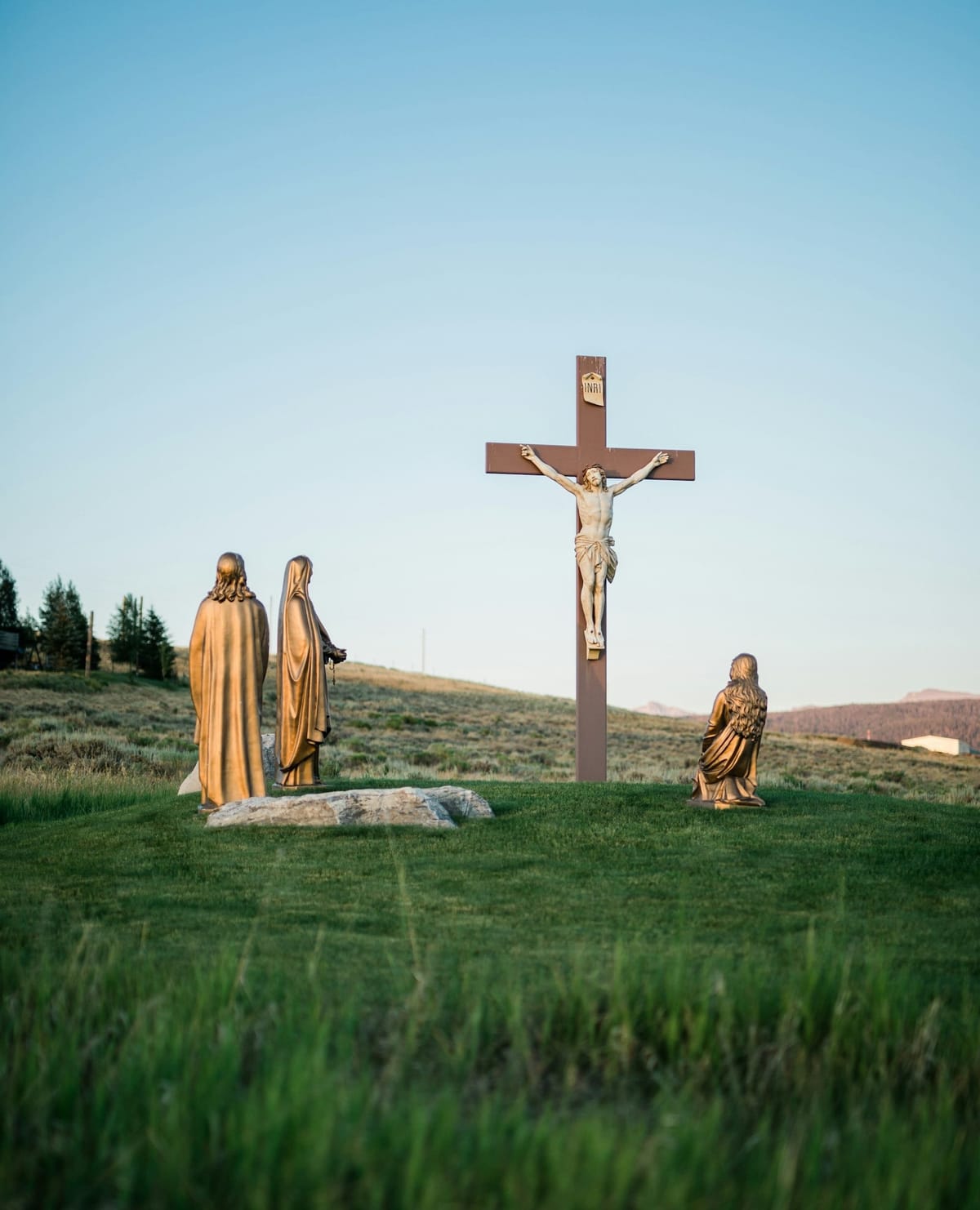
Psalm 22:1–24
Phrases that spoke to me today:
• My God, my God, why have you abandoned me?
• they have pierced my hands and my feet
• he has not spurned or disdained the misery of this poor wretch
• when he cried out to him, he heard him
Applying the Word to my Life:
“My God, my God, why have you abandoned me?” These words take me back to the cross, but somehow deeper. Growing up, it sounded like pure despair. Like Jesus Himself had given up hope. I didn’t even know they were part of a psalm, I was just looking at the words alone and it was a hard thing for me to understand.
Much later in my life, I was introduced to the whole psalm. That revelation changed the Passion for me. Psalm 22 is not a prayer that ends in abandonment. It is a prayer that moves through anguish without letting go of God. Jesus is not borrowing one dramatic line. He is praying the whole shape of the psalm from inside His Passion.
These words take me from observing at the foot of the cross to the center of our Savior's heart. The very center of Christ’s suffering as He dies like the grain of wheat. The Gospel introduced me to the scene—the mockery, the exposure, the weakness, the sense of being surrounded, pressed, and poured out. The psalm gave me His refusal to let pain become the final truth. Jesus is not denying the horror of the Cross. He is praying through it. He is enduring it without stepping outside the Father’s presence.
This new understanding did something to my own sufferings too. It brings me closer to the center of Christ’s Passion, but by doing that it also pulls me out of the center of whatever I might be going through. When I pray Psalm 22, I am no longer trapped inside my own little world as though nothing exists beyond it. I am praying in Christ, with Christ, and through Christ. Suffering is still real, but we are no longer alone inside it, and I am no longer its only reference point.
That is part of why this psalm feels like fuel for the race. Earlier we looked at the cloud of witnesses and the long endurance by which fruit ripens. This prayer helps us join them. It teaches us how the witnesses ran when pain was real and heaven did not feel close. They did not endure by pretending suffering was smaller than it was. They endured by staying in prayer long enough for surrender to become deeper than reflex. This psalm shows us that path.
And maybe that is the deepest gift of this psalm. If I want to move from reflex to surrender, these words are the map. Reflex says: collapse inward, answer pain with panic, make my suffering the whole horizon. But this prayer keeps turning me Godward. It teaches me to tell the truth without letting that truth harden into despair. It lets me speak from inside the wound without making the wound my master.
No matter the difficulty in life—large or small—we are not abandoned. The feeling is real. The cry is real. The darkness is real. But none of those things are the whole truth. Jesus prays this psalm not because the Father has ceased to be His God, but because even in the deepest suffering He is still speaking to the Father. Still holding on. Still surrendering Himself in trust.
So when I pray these words, I am not just reading an ancient cry of pain. I am stepping into the prayer of Christ. And in that prayer, suffering is no longer sealed off inside itself. It is taken up into something larger: His Passion, the witness of the saints, and the long race of faith that keeps moving toward the Father.
Everything changes when I move my focus from the challenge in front of me to the center of the cross.
My Response for Today:
Today I will pray honestly from inside my suffering, but I will keep turning my words toward the Father with Jesus.