
The Cost That Frees
Mark 8:34–38
Phrases that spoke to me today:
• “Deny yourself”
• “take up your cross”
• “follow me”
• “whoever wishes to save his life will lose it”
Applying the Word to my Life:
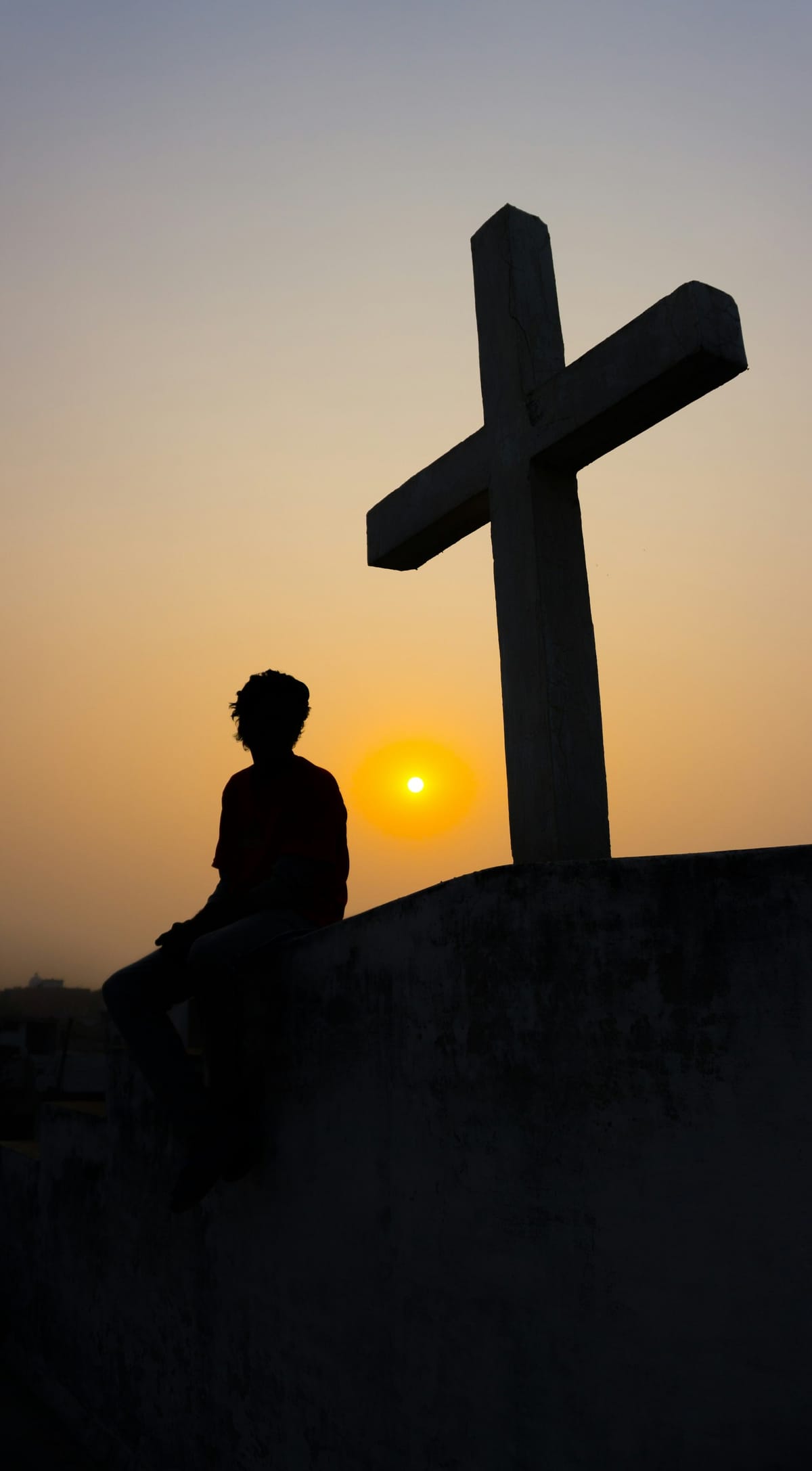
It is easy for me to water down the Cross so much that it starts to lose its impact on me. “Deny yourself, take up your cross, and follow me” can become a shorthand for getting through a day when people are trying my patience and every traffic light seems to turn red. But if that is all Christ was talking about, He chose some strange words to say it.
The Cross is not just a name for whatever I find annoying, inconvenient, or uncomfortable. Jesus is talking about something deeper than that. It is about the death of the part of me that insists on being the center of my universe. Love, in the Christian sense, is not just a feeling. It is a gift of self without expecting something in return. It is willing the good of another without regard to my own comfort, preferences, or control.
That is why Jesus uses the language of the Cross. He is not dressing up inconvenience. He is describing what love actually costs. If I really let that land, it can raise a hard question. Does God somehow want pain? Does He value suffering more than I do? Otherwise why would the path of following Him sound so costly?
A bit over a decade ago, one of my sons came to our room in the middle of the night. Stacey and I were deep asleep, and he was crying. He had gotten up in the night, tripped, and hit his head. We turned on a light and saw blood pouring down from his head. I am not normally fazed by blood, unless it is my family that is hurt. This froze me in place for a second, and my own head hurt too. We used a trauma kit to slow the bleeding and Stacey took him to the hospital for stitches. I stayed back, cleaned the blood out of the carpet, and waited for them to get home.
I was not the one who had been cut, but I could feel his pain almost as if I were the one who had been hurt. Not in the same way, obviously, but in a real way. That is just what love does. When someone you love is hurt, you do not stand outside it like a detached observer.
My love for my children is a grain of sand compared to God’s love for us. So if even I can feel my child’s pain almost as my own, then God does not look at the suffering of His children with less love than that. He feels it as His own.
Pain is not the point. The Cross is not proof that God likes pain. It is proof that He loves us enough to enter it Himself. But love—real love—always asks something of us. It costs pride. It costs comfort. It costs control. It costs the right to keep myself at the center.
That is why the Cross is not just costly. It is freeing. Jesus is not asking me to lose myself in some empty way. He is asking me to let die the part of me that cannot love because it is too busy protecting itself. Every time I cling to comfort, control, pride, or the need to come first, I end up smaller. Every time I let love cost me something, I become a little more free.
So taking up my cross will usually look a lot less dramatic than I imagine. It will look like ordinary self-gift. It will look like patience, honesty, sacrifice, forgiveness, and staying faithful when I would rather choose myself. That is not because pain is holy on its own. It is because love is. And once love is real, some kind of sacrifice is always close behind.
The Cross is not just the place where love hurts. It is the place where love wins. It is where self stops being the center. It is where control begins to loosen its grip. It is where I start becoming capable of the kind of love I was made for. That is costly, but it is not grim. It is the road into real freedom.
So what do I want more: escaping the cost of the Cross, or accepting the real life that comes from it?
My Response for Today:
Today I will notice where love costs me something real, and I will choose self-gift instead of self-protection.