
Already in the Bag
The first bag I looked at had four pairs of underwear, two pairs of socks, ten shirts, and no sunscreen. There was more packed into that bag than my kids knew. What does their bag teach us about God? A reflection on Luke 24:13–35.
Luke 24:13–35
Phrases that spoke to me today:
• "we had hoped that He was the one to redeem Israel"
• "Stay with us, for it is toward evening and the day is now far spent"
• He was known to them in the breaking of the bread
• "Did not our hearts burn within us while He talked to us on the road?"
Applying the Word to My Life:
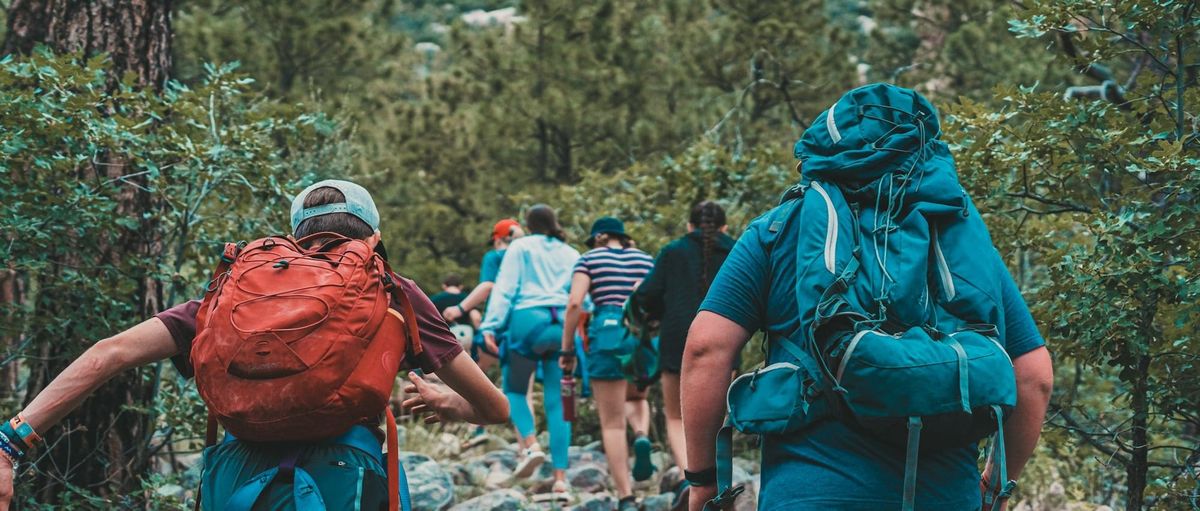
The first bag I looked at had four pairs of underwear, two pairs of socks, ten shirts, swim trunks, and a pair of shorts. That seemed a little off for five nights away.
No sunscreen. No bug spray. No toothbrush. Plenty of shirts.
When the kids were younger Stacey and I would go through the bags before they left for camp — not to redo their work, but to make sure they had what they actually needed. The practical stuff they wouldn't think of. The extras that wouldn't seem important until they were standing in the hot sun on day three with no sunscreen. And usually a few things that weren't strictly necessary — a little extra cash tucked into a pocket, some snacks for the bus ride.
The things mattered, but there was something more than what you would see by looking at them. Packed into those bags, alongside the sunscreen and the bug spray, was a message: we are thinking of you. We care about what happens to you. Our love is going with you — even when we can't.
On the road from Jerusalem to Emmaus, two disciples thought they had been abandoned and all was lost. They were heading home, defeated. The man they had followed was dead. Three days had passed, there were confusing reports of an empty tomb — not yet good news, just more confusion. A stranger fell in beside them and asked what they were talking about.
He walked the whole road with them. He listened. He opened the scriptures and explained everything — how it all fit together, the things that had to happen. Something was stirring inside them. They still didn't recognize Him.
When He sat down with them, took bread, gave thanks, broke it — their eyes were opened. They knew Him. And in the same instant, He vanished.
He was there the whole road. Not summoned at the table. Not arriving at the moment of recognition. Present and walking beside them from the first step, through every mile of confusion and grief, right up to the moment the bread broke and the veil lifted.
The disciples weren't walking alone. They just couldn't see Him.
Here is what is interesting about reading this story: we have a perspective the disciples didn't. We can see what they couldn't. We know the stranger is Jesus. We watch Him walk the whole road with them, open the scriptures, sit at the table. From where we stand, there is no mystery — the full picture is visible to us while they could only see a stranger.
That is exactly what faith does for us in our own lives. It gives us access to the view the disciples lacked on the Emmaus road — not certainty manufactured from nothing, but a way of knowing that reaches past what our senses can report. The disciples felt their hearts burning before their eyes were opened. Something was happening that their minds hadn't caught up to yet. The presence was real and active before they could name it.
This is how the life of faith actually works most of the time. We don't always feel the presence. There are stretches of the road — sometimes long ones — where the grief is real and the silence is real and the sense of walking alone feels real. But we have been given eyes that can see what the disciples on that road couldn't — that He is there, that the road is not empty, that the veil between us and the full reality is not the same as absence.
We have spent this week at the Eucharist — looking at bread and wine that look and taste like the food we would have at any ordinary table. But there is something our senses alone can't reach. The Emmaus road is the same territory. The risen Christ walks seven miles with two grieving disciples and they do not recognize Him with their eyes. They recognize Him in the breaking of bread — the same moment we do.
Jesus is always present. What changes is the veil, not His proximity.
The bag the kids left for camp with had more packed into it than they knew. The sunscreen would be there when they needed it. The snacks were on the bus. The extra cash was in the pocket. They didn't have to feel our presence to be accompanied by it.
There are moments when we feel it — when the bread breaks and we know. There are stretches when we don't. Both times, He is on the road with us.
My Response for Today:
Today I will name one place in my life where the road feels empty and name at least one way that He is with me.