
Cut from the Same Cloth
Paul's aprons healed the sick, and I'm carrying a card from a confession years ago. Neither one is magic. A reflection on Acts 19:8-12.
Acts 19:8-12
Phrases that spoke to me today:
• daily discussions in the lecture hall of Tyrannus
• so extraordinary were the mighty deeds God accomplished at the hands of Paul
• face cloths or aprons that touched his skin were applied to the sick
Applying the Word to My Life:
When I was at St. Peter's in Rome, my two younger sons and I went to confession. They went before me, so I was the last one of the three to step into the confessional. After I finished, the priest said something to me in a thick Polish accent that I wasn't sure I had heard correctly: he asked if I wanted a relic of St. John Paul II.
I asked him to repeat himself, and once I realized what he was offering, the answer was easy. He opened the door to his side of the confessional, talked with the three of us for a while, and then gave each of us a card containing a tiny cutting from one of John Paul II's garments. I still carry mine with me.
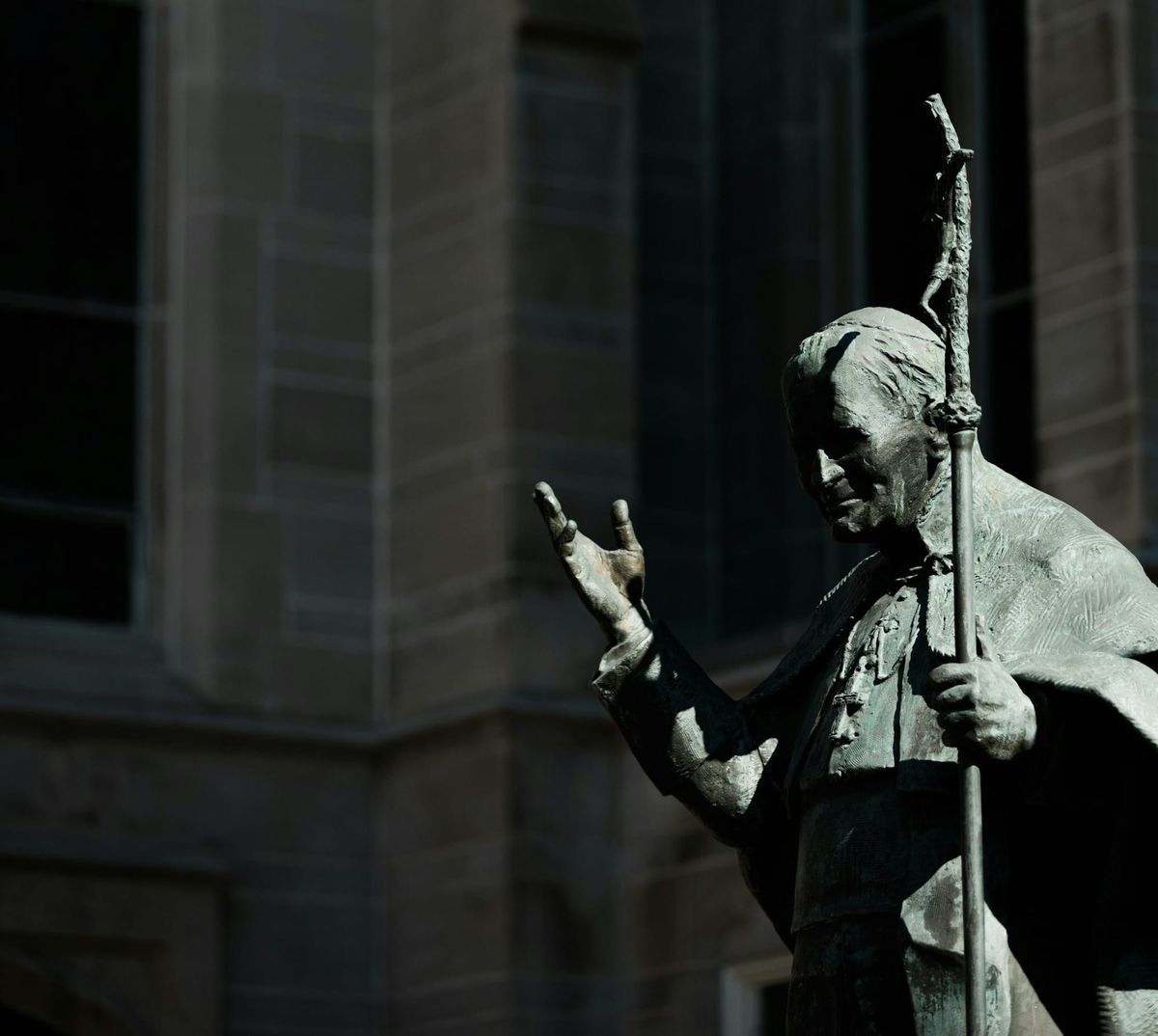
I don't carry it because I think the cloth is magical. I carry it because it connects me to a real day, a real place, and a real person. It reminds me of being in St. Peter's with my sons, of that priest's kindness, and of John Paul II, a man whose life and witness shaped the Church and touched people around the world.
That's why today's reading feels surprisingly familiar. Paul had spent years in Ephesus teaching, arguing, preaching, and pouring himself into the people there. Then Luke tells us that even face cloths and aprons that had touched Paul's skin were carried to the sick, and God worked through them. The important part is that God did the work. The cloth was never magic, but the physical object still mattered because it had been connected to a life that God was using.
That's the instinct behind relics. A relic matters because the person mattered, and the person mattered because God did something through that life. Christianity doesn't ask us to pretend bodies and physical things are irrelevant. Jesus became flesh. Paul taught until people across the region had heard the Gospel. John Paul II prayed, preached, traveled, suffered, and served in a body.
Relics point backward to a holy life so they can point us forward toward our own.
That's the real challenge of relics: they shouldn't leave us staring at the object. They should make us ask what kind of life we're living now.
Paul's aprons mattered because of the man Paul had become. John Paul II's garment matters because of the life lived inside it. The same God is still at work in ordinary human lives, including ours.
My Response for Today:
Today I'll remember one holy life that has shaped mine and ask what I can imitate.