
Family Stories
I was ten when my great-grandmother died on Easter Sunday — it took years of family stories after that to learn who she really was. A reflection on Hebrews 11:32-40.
Hebrews 11:32-40
Phrases that spoke to me today:
• who by faith conquered kingdoms, did what was righteous, obtained the promises
• The world was not worthy of them
• Women received back their dead through resurrection
Applying the Word to My Life:
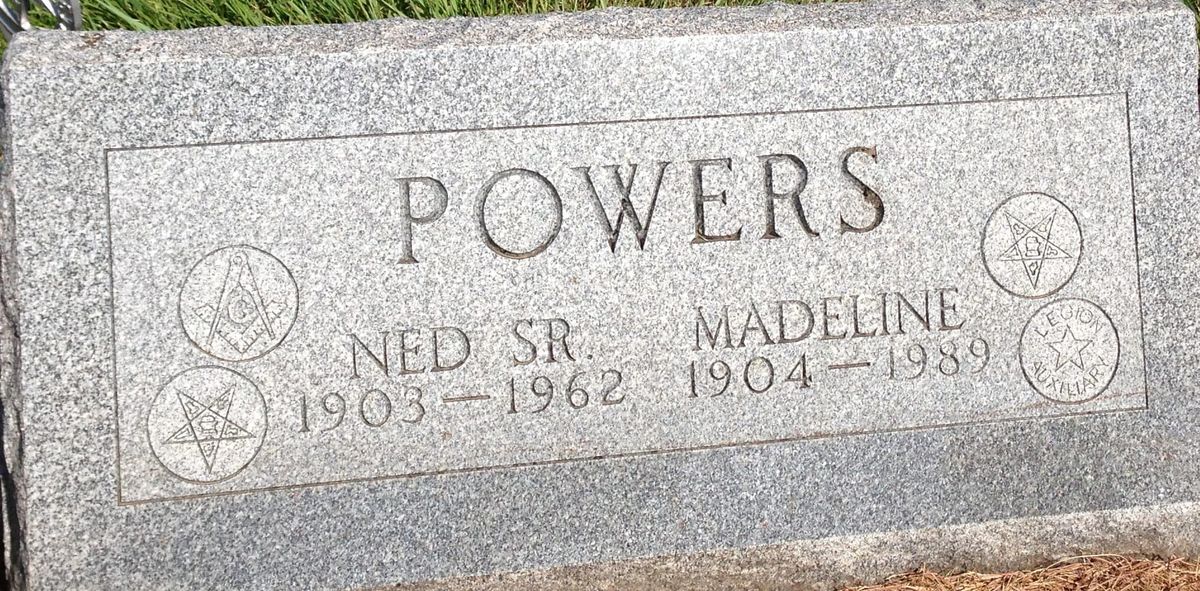
I was ten years old when my great-grandmother died.
It was March 26, 1989 — Easter Sunday that year. Normally, Easter meant a big family gathering at her house. That year she was in the hospital, and my parents had already told me she probably wasn't going to make it.
I understood enough to know what that meant, but not enough to know what to do with it. For several nights I went to bed knowing the phone might ring and somebody might wake me up with bad news.
At ten years old, death and resurrection had somehow landed on the same day, and I didn't really know how to hold both at once.
At that age, most of what I knew about her was pretty simple. I remembered what she looked like, holidays at her house, playing there while the adults talked, the feel of the place and the people gathered in it.
What's strange is that I came to know her better after she was gone.
At first, my parents told me the good stories. I learned more about her faith, the way she treated people, the things she had done for others, and the woman she eventually became. As I got older, though, the stories became more complete. I began hearing about some of the mistakes she had made too, the wrong turns and failures that had been part of the road getting there.
Those stories may have helped me even more.
It's one thing to hear about someone who lived well. It's another to discover that the person you admire didn't always live well, that there were places where she stumbled and still got back up. Knowing that has helped me do the same. A failure can feel awfully final when it's yours. Her story reminds me that it doesn't have to be the last word.
My parents also told me something she used to say about me. She thought I was someone who loved deeply.
I don't think I understood that about myself when I was ten. I'm not sure I would have even known what she meant. But as I've gotten older, I can see some of what she saw. I can also see how that part of me has kept pulling me back toward the people I love, toward God, and toward the road I was supposed to be walking when it would have been easier to wander away.
She saw something in me before I knew how to see it myself.
All of that came to me through stories.
That's part of what families do. We keep telling the stories of the people who came before us — not only the polished parts, but enough of the whole life to understand who they became. We remember what they did well, where they struggled, what they learned, and sometimes what they saw in us before we were old enough to recognize it.
Hebrews does the same thing.
The writer starts naming people: Gideon, Barak, Samson, Jephthah, David, Samuel, the prophets. Then he starts piling up the stories — kingdoms conquered, lions shut up, fire escaped, weakness turned into strength, torture endured, chains, prison, exile, death.
It reads almost like someone at the family table saying, "Do you remember this one? Let me tell you what happened."
And these aren't spotless heroes. Some of the names in Hebrews come with stories we probably would have edited out if we were trying to make everyone look impressive. They failed. They made terrible decisions. They got scared. They wandered.
And still, this is the hall of faith.
That matters to me.
Hebrews isn't preserving these lives because every moment was worthy of imitation. It's preserving them because God remained at work in people whose stories were unfinished. Their failures were real, but they weren't always final.
That's why Christians keep telling the stories of the saints.
We're not pretending they were flawless, and we're not replacing Jesus with heroes. We're remembering what grace can do in an actual human life — including a life with mistakes, weakness, repentance, courage, and another chance to get back up.
The saints are family stories.
Sometimes they show us what faithfulness looks like. Sometimes they show us what getting back up looks like. Sometimes their lives name something in us that we haven't learned to recognize yet: courage we might need, mercy we might be capable of, a way of loving we haven't understood as a gift.
When I was ten, I mostly understood that my great-grandmother was dying.
It took years of stories before I began to understand how she had lived, where she had fallen, how she had gotten back up, and even something she had already seen in me.
Maybe that's what Hebrews is doing for us. It's making sure we inherit more than names. It's handing us whole enough lives that the faith of the people who came before us can still help shape what comes next.
We honor the faithful who came before us not because their stories were perfect, but because their stories remind us that ours isn't finished either.
My Response for Today:
Today I'll remember one faithful person whose story helps me keep going.