
Mind the Gap
We describe people by what they do. We describe ourselves by our failures. James says there is a mirror that shows something truer than any of that. A reflection on James 1:22–27.
James 1:22–27
Phrases that spoke to me today:
• be doers of the word and not merely hearers
• like someone who looks at his face in a mirror
• goes off and promptly forgets what he looked like
• pure and undefiled religion
Applying the Word to My Life:
When you meet someone for the first time, one of the first questions is almost always the same: what do you do? It goes the other way too — we describe our failures in the same terms. I confuse that mistake I keep making with who I actually am. The truth is our identity and our actions are related, but different things.
James helps us see that today. He describes a man who looks into a mirror and sees himself clearly — then walks away and forgets what he looks like. Our faith holds up that mirror, but the world can help us forget. What we do in the world makes up our résumé and record. Our faith gives us the foundation that never changes — we are each a beloved child of God. Wonderfully and beautifully made. That is who we are, unchanged any of the things we have done or left undone.
If we aren't careful, if we give in to the temptation to reduce ourselves to what we do, it becomes easy to forget who we truly are.
A few years ago one of my sons was going through a rough patch. I don't remember exactly what it was — something we had already been through more than once. I remember sitting on our front step with him and talking with him.
I told him that, as his father, I always see the beautiful, good and loving boy that is mine. The mistakes don't change that. They never could.
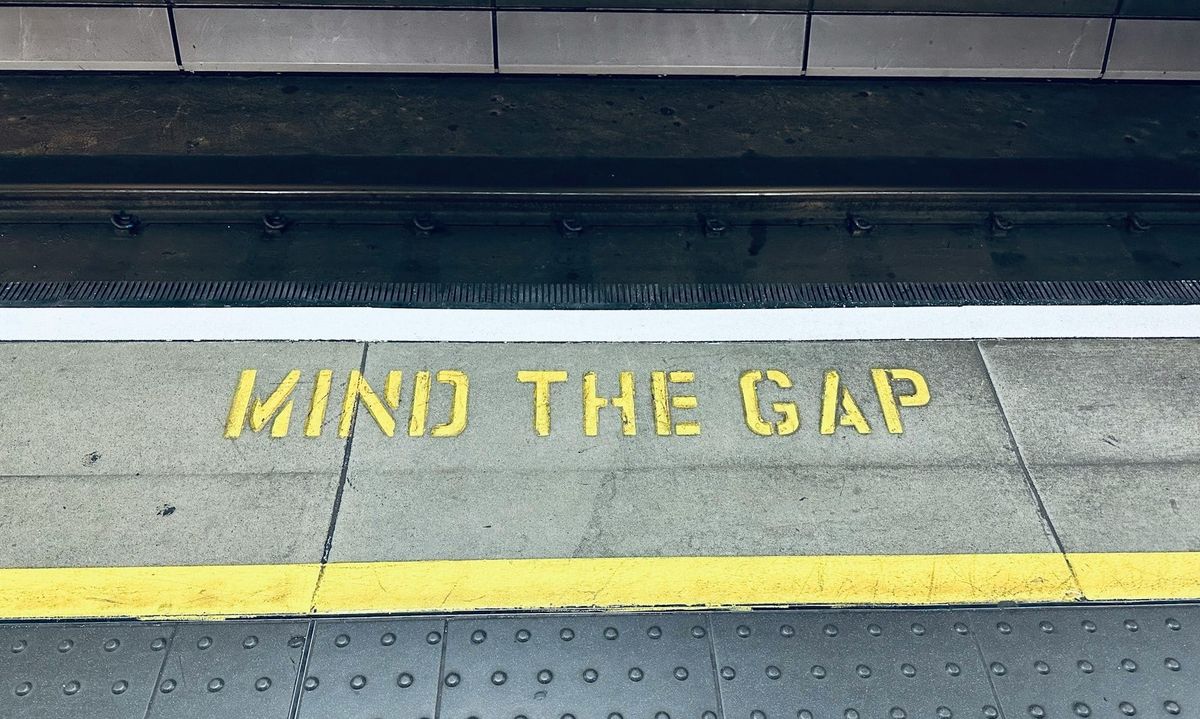
But I also told him that the mistakes couldn't be left alone. Because mistakes become patterns. Patterns become habits. And habits do something the original mistakes didn't — they start to change how you see yourself. Not who you are, but how you see yourself. You lose the feeling of the gap between what you did and who you actually are. That gap matters. Without it, the next wrong choice gets easier. And the one after that. The world starts to see you for the habit instead of for who you are underneath it.
The danger isn't what the mirror shows you. The danger is what you forget when you let the world replace that image.
The consequence we put in place wasn't punishment for its own sake. It was to hold onto the tension before it disappeared — to interrupt the pattern before it could close that gap for good.
That tension is a signal. It is the feeling that tells you something you are doing doesn't line up with the mission you were made for. It is uncomfortable. But it is also the thing that keeps you true to who you were meant to be. It can help guide us through our day. When I wake up and feel that tension, whatever I'm doing that day is just what I have to do — not who I am. Mornings like the fundraiser morning from yesterday have no tension — what I was doing was aligned with who I am.
James is not just asking us to do more good things. He is asking us to stay close enough to the mirror to remember what we saw.
The tension isn't the enemy. It is the signal. It is supposed to be uncomfortable. But the person who keeps the tension keeps that vision of who they truly are.
That tension shifts us out of performing obedience out of fear. It moves us into living out our identity — the one the mirror shows us.
We don't just forget a rule. We forget ourselves.
My Response for Today:
Today I will find one place in my life where I feel that tension between what I am doing and who I am and pay attention to what that tension is telling me.