
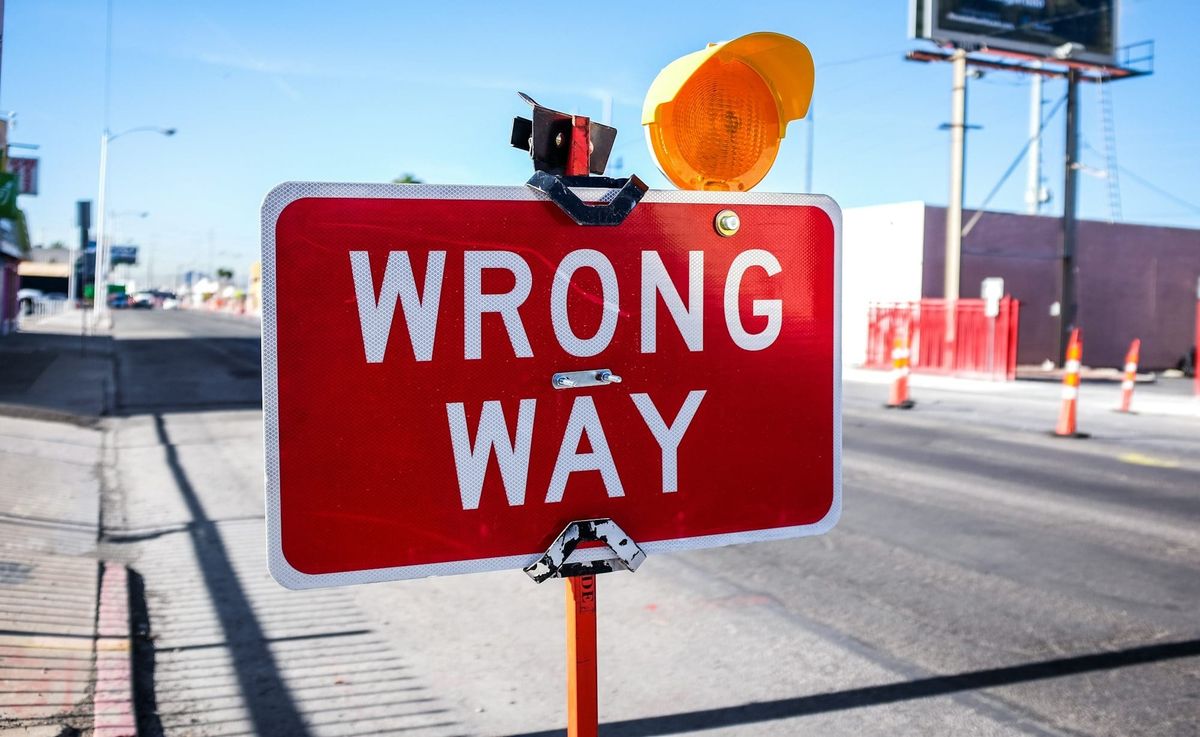
Wrong Way
If God loves us and is merciful, why can't I do whatever I want? Being a dad helped me understand the Father. A reflection on Psalm 103:1–14.
Psalm 103:1–14
Phrases that spoke to me today:
• slow to anger and abounding in steadfast love
• he does not deal with us according to our sins
• as far as the east is from the west, so far he removes our transgressions
Applying the Word to My Life:
The most frustrating thing about watching my sons make bad choices is not the choices themselves. Mistakes are part of life — I know they are coming, and I am there for them when they do. What is hard is knowing what they are capable of and watching them choose something smaller. But being a parent means being with our children through their life, not sheltering them from it.
Psalm 103 opens this week with a portrait of who God is at the center of everything. Not a story. Not an argument. Just a face. Slow to anger. Compassionate. Abounding in steadfast love. And near the end of the passage, an image the psalmist reaches for to describe what this looks like: as a father has compassion for his children, so the LORD has compassion for those who fear him.
I know that image from the inside.
A few years ago one of my sons decided he wanted to stop working and spend more time with his friends. I tried to talk to him about it. I didn't get anywhere. So eventually I had to make a harder call: I stopped supporting him.
I told him he was free to make his own choices — I would not take that from him. But I could not keep supporting a choice I believed was going to hurt him. There is a difference, I told him, between support and enabling. I was there for the first. I could not be part of the second. He still had what he needed — food, shelter, clothing. What I pulled back were the extras. The things he wanted but did not need.
They were hard months.
But he came around. He found the balance between the things that matter and the things that feel good in the moment. And he found it because he had to — because I was not standing between him and the consequences of his choices.
What I was withholding was not love. I was letting him feel the very thing that could help him grow.
Psalm 103 is often read as pure comfort. And it is comforting — genuinely. But I think it is describing something more precise than a God who simply removes all consequence. What he removes is the breach. The guilt. The part that says you are no longer mine. The relationship stays. The love never withdraws. But sometimes love requires letting the consequences be felt.
God's instinct is still mercy. That doesn't mean the hard thing never comes. But it is never wasted.
My Response for Today:
Today I will ask whether there is a place in my life where I am looking for God to remove a consequence rather than carry me through it.